

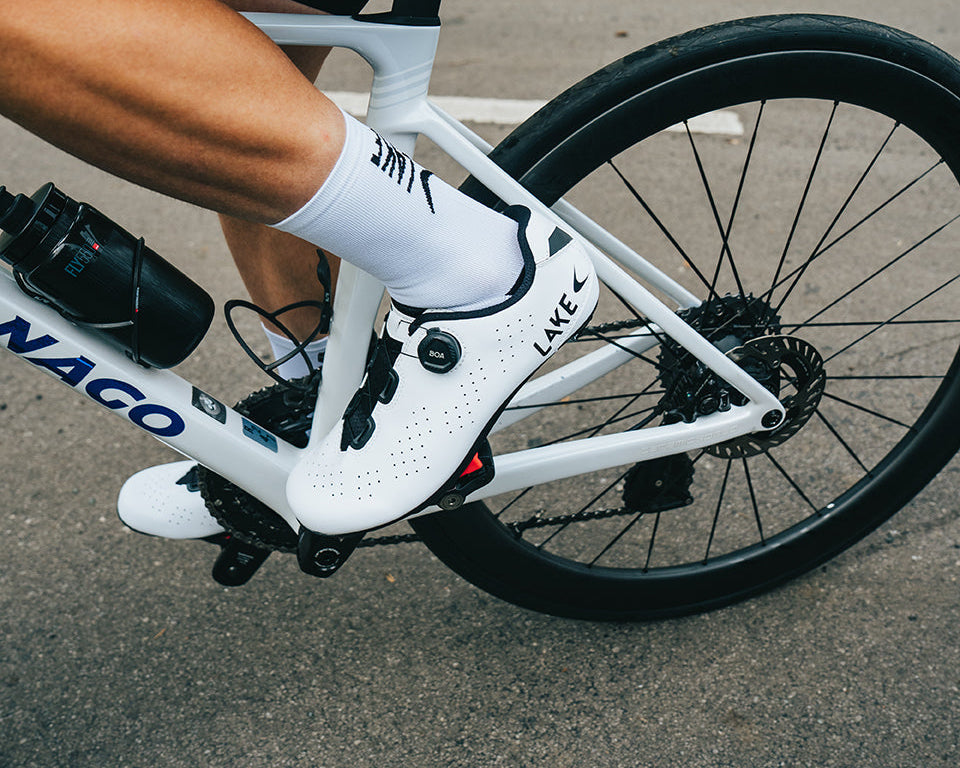
Als fietsschoenen je voeten ooit gevoelloos hebben gemaakt, drukplekken op je voorvoet hebben veroorzaakt of na een uur op het zadel pijnlijk strak aanvoelden, ligt het probleem hoogstwaarschijnlijk niet aan je voeten. Het ligt aan de schoen.
De fietsindustrie heeft decennialang schoenen ontworpen rond een enkele voetvorm en breedte behandeld als een simpele maataanpassing. Voor fietsers met bredere voeten, een hogere wreef, veel teenspreiding of hallux valgus werkt die aanpak niet. Het levert schoenen op die knellen waar ze dat niet zouden moeten doen, de bloedsomloop belemmeren en je op elke rit ongemerkt vermogen en comfort kosten.
Bij Lake bouwen we onze schoenen rond een ander principe: pasvorm eerst, al het andere daarna. Dat betekent ontwerpen vanuit aparte leesten, de gegoten vormen die de daadwerkelijke vorm van een schoen bepalen, in plaats van een gewone leest op te rekken en die breed te noemen. In deze gids leggen we uit hoe je herkent of je een brede fietsschoen nodig hebt, waar je op moet letten bij het kiezen en welke Lake modellen zijn gebouwd voor voeten waar de meeste schoenen niet goed voor werken.
Waarom de meeste fietsschoenen niet passen bij brede voeten
Om te begrijpen waarom brede voeten zo vaak slecht bediend worden, helpt het om de leest te begrijpen. De leest is de driedimensionale vorm waaromheen een schoen wordt gebouwd. Die bepaalt niet alleen lengte en breedte, maar ook de teenvorm, de structuur van de voetboog, de wreefhoogte, de geometrie van de hielkom en het totale volume. Elk ander onderdeel van de schoen (het bovenwerk, het sluitsysteem, de zool) wordt eromheen gebouwd.
De meeste fabrikanten van fietsschoenen werken met een of twee leesten per categorie. Als ze een "brede" versie aanbieden, betekent dat meestal dat een enkel punt van de standaardleest is verbreed, meestal bij de voorvoet, zonder de vorm van de teenbox, de wreefhoogte of de hielgeometrie aan te passen. Het resultaat is een schoen die op papier breder is, maar nog steeds gevormd is voor een andere voet dan de jouwe. Een echt brede fietsschoen is gebouwd op een volledig andere leest.
De teenbox biedt ruimte voor natuurlijke teenspreiding zonder het eerste of vijfde middenvoetsbeentje samen te drukken. Het voorvoetvolume is groter. De totale vorm weerspiegelt de werkelijke anatomie van een bredere voet, geen aanpassing van de standaard.
De gevolgen van een slechte pasvorm zijn voorspelbaar: gevoelloosheid in de voorvoet, meestal na 45-60 minuten op het zadel; drukplekken waar bot en bovenwerk elkaar raken; blauwe teennagels op langere ritten; minder krachtoverdracht doordat je voet onder belasting in de schoen beweegt. Dit zijn geen tekenen van zwakte of een slechte fietstechniek. Het zijn tekenen van een schoen die niet bij je voet past.
Hoe weet je of je een brede fietsschoen nodig hebt
Breedte bij fietsschoenen draait om twee aparte metingen: de breedte van je voorvoet (gemeten over de bal van de voet) en de totale ruimte die je voet in de schoen inneemt. Een voet kan breed zijn in de ene betekenis zonder breed te zijn in de andere.
Signalen dat je mogelijk een bredere schoen nodig hebt:
-
Je tenen voelen zijdelings samengedrukt, vooral als ze warm of vermoeid zijn
-
Je ervaart gevoelloosheid over de bovenkant van je voet tijdens langere ritten
-
Je draait de sluitdraaiers regelmatig losser tijdens de rit om druk te verlichten
-
Je voeten zwellen merkbaar op tijdens ritten van meer dan twee uur
-
Je hebt hallux valgus (knobbeltenen) die druk tegen het bovenwerk geven
-
Je hebt in andere fietsschoenen een hele maat groter genomen, puur om voldoende breedte te krijgen
Zo meet je je voeten:
Ga met je volle gewicht op beide voeten op een vel papier staan. Trek de omtrek van elke voet over. Meet het breedste punt over de bal van de voet en vergelijk dat met onze maatgids en fit matrix. Voor het meest nauwkeurige pasvormadvies gebruik je onze Find My Fit tool, die rekening houdt met je voetlengte, breedte, wreefhoogte, voetboogvorm en beoogd gebruik.

Waar je op moet letten bij een brede fietsschoen
Leestvorm, niet alleen een breed label
Zoals hierboven besproken zegt een "wide" label op zichzelf weinig. Zoek schoenen die gebouwd zijn op een specifieke brede leest, met een ruimere teenbox, meer voorvoetvolume en een geometrie die is afgestemd op een bredere voetvorm. Voor maximale ruimte biedt onze Comfort Plus Last het meest royale voorvoetplatform in het Lake assortiment, speciaal ontworpen voor voeten met veel volume en fietsers met opzwellende voeten.
Materiaal en constructie van het bovenwerk
Gesegmenteerde bovenwerken, waarbij de schoen is opgebouwd uit meerdere onafhankelijke panelen in plaats van één doorlopend stuk, laten verschillende zones apart meebuigen en zich aanpassen aan verschillend gevormde voeten. Een bovenwerk van volnerfleer vormt zich naar je voet en rekt in de loop van de tijd iets mee, wat een groot voordeel kan zijn voor fietsers van wie de voeten onder belasting van vorm veranderen.
Sluitsysteem
Voor brede voeten geeft een dubbele BOA Li2 sluiting je meer controle dan een enkele draaier: je stelt de voorvoet en middenvoet onafhankelijk van elkaar af, wat uitmaakt wanneer de pasvormbehoefte per zone van de voet verschilt. BOA M4 draaiers, gebruikt op wintermodellen, zijn ontworpen om met handschoenen te bedienen: een praktisch punt voor wie in de kou rijdt.
Zoolstijfheid
Een stijvere zool draagt meer vermogen over en kan helpen het uitzetten van de voorvoet onder belasting te beperken. De meeste brede Lake racefietsschoenen hebben een zool van volledig carbon. De CX201 gebruikt een zool van carbon composiet: stijver dan nylon, geschikt voor training en lange afstanden. Voor de winter verschuift het zoolmateriaal naar met glasvezel versterkt nylon, passend bij de flexibiliteit die koudere omstandigheden vragen.
De beste brede racefietsschoenen van Lake
CX239 Wide
De CX239 Wide is gebouwd op de Competition Last, met een grotere teenbox en een nauwere hielkom dan de Comfort Plus Last: een prestatiegerichte pasvorm voor fietsers die ruimte in de voorvoet nodig hebben zonder hielcontrole in te leveren. Het bovenwerk is verkrijgbaar in waterafstotend volnerfleer of Clarino Microfiber met mesh, en de sluiting bestaat uit twee BOA Li2 draaiers met een bredere tussenruimte voor een betere afstelling van de voorvoet. De zool is Lake's Competition 100% Carbon Fiber met een 3-bouts schoenplaatpatroon. Dit is de juiste schoen als je een bredere voorvoet hebt maar een vrij standaard wreef, en een schoen met carbon zool wilt die werkt voor zowel training als wedstrijden.
CX333 Wide
De CX333 Wide is Lake's brede racefietsschoen uit het topsegment. Hij staat op de Race Last en komt in drie breedtes: Narrow, Regular en Wide, waarmee het een van de meest precies passende schoenen in het assortiment is. Het bovenwerk is naar keuze Klite kangoeroeleer of Clarino Microfiber met temperatuurregulerende Outlast voering. De zool gebruikt Lake's dubbele carbonsysteem: een semi-flexibel glasvezelplatform opgehangen boven een stijve buitenzool van 100% carbon, met een Carbitex steunpaneel voor de voetboog en een thermovormbare Thermaform Carbon Fiber hielkap. Wil je Lake's meest geavanceerde racefietsschoen en heb je een brede pasvorm nodig, dan levert de CX333 Wide dat zonder compromissen.
CX242 Wide
De CX242 Wide is speciaal ontworpen voor voeten die lastig te passen zijn. Het bovenwerk is opgebouwd uit zes onafhankelijke segmenten die per zone van de voet meebuigen en ruimte geven, in plaats van uit één doorlopend paneel. Een thermovormbare hielkap geeft achteraan houvast zonder vooraan druk te creëren. Bovenwerkopties zijn volnerfleer of Clarino Microfiber met NuFoam voering. De zool is 100% carbon met 3-bouts schoenplaatcompatibiliteit. Voor fietsers die nog nooit een goed passende fietsschoen hebben kunnen vinden is de CX242 Wide het model om te proberen.
CX201
De CX201 is gebouwd op de Comfort Plus Last: het meest royale voorvoetplatform in het Lake wegassortiment. Hij is alleen verkrijgbaar in Regular, maar die Regular is van zichzelf breed: de Comfort Plus Last is ontworpen voor brede voeten, hoge wreven en fietsers van wie de voeten opzwellen op langere ritten. Er is geen aparte Wide variant, omdat het ontwerp van zichzelf al ruimte biedt aan brede voeten.
Het bovenwerk is Clarino Microfiber met ademend mesh en NuFoam, waardoor hij uitstekend geschikt is voor warm weer en het rijden zonder sokken. De zool is een carbon composiet, geschikt voor training en lange afstanden. De sluiting is dubbel BOA Li2. Heb je maximaal voorvoetvolume en de hele dag comfort nodig, en voelen de andere modellen te krap, dan is de CX201 de juiste keuze.
De beste brede MTB fietsschoenen
MX239 Wide
De MX239 is verkrijgbaar in zowel Regular als Wide. Hij is gebouwd op de MX Competition Last en gebruikt dezelfde dubbele BOA Li2 configuratie als de CX239 voor de weg, maar met een Lake Competition carbon zool gecombineerd met Mountain Competition echt rubber voor grip en bescherming op de trail. Bovenwerkopties zijn slijtvast Helcor leer of Clarino Microfiber met Outlast voering. De geïntegreerde tongconstructie verbetert de stabiliteit van de voet, en de met glasvezel versterkte hielkap houdt de hiel stevig op zijn plaats zonder elders extra druk te geven.
MX242
De MX242 past hetzelfde gesegmenteerde zes-zone bovenwerkconcept van de CX242 toe op een MTB platform. Hij is verkrijgbaar in Regular en Wide en ontworpen voor lastig te passen voeten, inclusief hallux valgus en voetafwijkingen. De thermovormbare hielkap maakt een individuele vorm van het achtervoetgedeelte mogelijk. Het bovenwerk is slijtvast Helcor leer met NuFoam voering. De zool combineert 100% carbon met Mountain Competition rubber voor grip op technisch terrein. De sluiting is dubbel BOA Li2.
De beste brede gravel fietsschoenen
MX239 Gravel Wide
De MX239 Gravel Wide is de gravelspecifieke versie van het MX239 platform. Hij gebruikt dezelfde Competition Last, maar met lichtere rubberbedekking dan de MTB variant, geoptimaliseerd voor de gemengde ondergronden van gravelritten in plaats van volledig trailgebruik. Bovenwerkopties zijn onder andere gerecycled leer en Clarino Microfiber, en de sluiting is dubbel BOA Li2. De zool combineert Lake's carbon basis met Mountain Race X rubber.
De geïntegreerde tong, de glasvezel hielkap en het grotere voorvoetvolume van de Wide versie maken dit een sterke keuze voor lange graveldagen waarop opzwellende voeten een rol spelen.
MX30G Wide
De MX30G Wide is Lake's wedstrijdgerichte gravelschoen, gebouwd op de Race Last en beschikbaar in drie breedtes. Ondanks het smallere leestprofiel biedt de Wide versie duidelijk meer voorvoetruimte voor prestatiegerichte gravelrijders die geen krachtoverdracht willen inleveren voor comfort. De zool is volledig carbon met duurzame TPU noppen en de mogelijkheid om teenspikes te monteren. Het bovenwerk is Clarino Microfiber of ademend mesh; de meshversie voert water snel af en droogt vlot, handig bij nat weer of het doorkruisen van beekjes.
De beste brede winterfietsschoenen
Nog even over de maat voordat we beginnen: Lake adviseert om winterfietsschoenen 1 tot 1,5 maat groter te kiezen, zodat er ruimte is voor dikkere sokken. Houd hier rekening mee bij je keuze.
CX146 Wide
De CX146 is Lake's brede winterschoen voor de weg, verkrijgbaar in Regular en Wide. Hij gebruikt de Sport Last en een Road Sport buitenzool van met glasvezel versterkt nylon, uitsluitend compatibel met 3-bouts wegschoenplaten. De sluiting is een BOA M4 draaier, ontworpen voor bediening met handschoenen. Het bovenwerk is een waterafstotende microvezel softshell met 200g Thinsulate isolatie.
Belangrijk: de CX146 is zeer waterafstotend, maar niet volledig waterdicht. Hij verwerkt opspattend water en lichte tot matige regen prima; bij langdurige zware regen dringt er uiteindelijk water binnen. De DWR coating moet na verloop van tijd opnieuw worden aangebracht.
MX146 Wide
De MX146 is de MTB tegenhanger van de CX146, verkrijgbaar in Regular en Wide, en compatibel met zowel 2-bouts SPD als 3-bouts wegschoenplaten. Hij gebruikt dezelfde waterafstotende microvezel softshell constructie met 200g Thinsulate isolatie en BOA M4 sluiting. De buitenzool is de Supergrip Enduro met ICE LOCK inzetstukken voor extra grip in koude, natte omstandigheden. Dezelfde opmerking over waterbestendigheid geldt hier: zeer waterafstotend, niet volledig waterdicht.
Hoe Lake breed anders aanpakt
Het verschil tussen Lake's brede schoenen en een standaard fietsschoen die als "wide" wordt verkocht, is de leest. Lake ontwerpt en produceert zijn eigen leesten, zes in het huidige assortiment. Dat onderscheid is belangrijk, omdat de klachten van een slecht passende fietsschoen niet verdwijnen met een schoen die op één punt zijwaarts is verbreed. Ze verdwijnen met een schoen waarvan de volledige driedimensionale vorm overeenkomt met de vorm van je voet.
Daarom biedt Lake de meest gevarieerde selectie leesten in de fietsindustrie. Niet om het kiezen ingewikkeld te maken, maar omdat voeten werkelijk verschillend zijn, en het enige eerlijke antwoord daarop is om schoenen te ontwerpen die dat weerspiegelen.
Veelgestelde vragen
Wat maakt een fietsschoen "breed" en hoe verschilt Lake's aanpak?
Een brede fietsschoen hoort gebouwd te zijn op een andere leest dan de standaardversie, niet simpelweg aangepast vanuit dezelfde vorm. Bij Lake worden brede schoenen gebouwd op aparte leesten die de werkelijke vorm van een bredere voet weerspiegelen: een ruimere teenbox, meer voorvoetvolume en een aangepaste hiel- en voetbooggeometrie. Dat is iets anders dan een standaardleest die op één punt is verbreed.
Hoe weet ik of ik een brede schoen nodig heb, of gewoon een grotere maat?
Een maat groter maakt de schoen langer, maar verandert de breedte en het voorvoetvolume nauwelijks. Voelt je schoen strak over de bal van de voet terwijl de lengte klopt, of wordt je voorvoet gevoelloos tijdens ritten, dan zit het probleem in breedte en volume, niet in lengte. Meet zowel je voetlengte als je voorvoetbreedte en vergelijk met de fit matrix.
Zijn Lake brede fietsschoenen verkrijgbaar in dezelfde maten als regular?
Ja. Lake brede schoenen zijn beschikbaar in hetzelfde maatbereik als hun regular tegenhangers. De beschikbaarheid per maat verschilt per model; controleer de productpagina ter bevestiging.
Ik heb hallux valgus, welke brede Lake schoen is het beste voor mij?
De CX242 Wide (weg) en MX242 (MTB) zijn speciaal ontworpen voor lastig te passen voeten, inclusief knobbeltenen en hallux valgus. Hun gesegmenteerde zes-zone bovenwerken buigen onafhankelijk mee rond drukpunten, in plaats van het hele bovenwerk strak te trekken.
Moet ik bij Lake brede fietsschoenen een maat groter nemen?
Voor weg-, MTB- en gravelmodellen volg je de standaard Lake maatgids. Voor wintermodellen (CX146, MX146) adviseert Lake 1 tot 1,5 maat groter te nemen voor dikkere wintersokken. Gebruik de maatgids en de Find My Fit tool voor een persoonlijk advies.
Hoe vind ik een Lake dealer voor het passen in de winkel?
Gebruik de winkelzoeker op de Lake Cycling website om de dichtstbijzijnde pasvormpartner te vinden. Passen in de winkel is altijd het nauwkeurigst, zeker voor fietsers die online moeilijk een goed passende fietsschoen konden vinden.
Exploring cycling freedoms
Fietsschoenen kiezen: de complete gids