

When the Foot Expands: A Conversation on Stability and Space
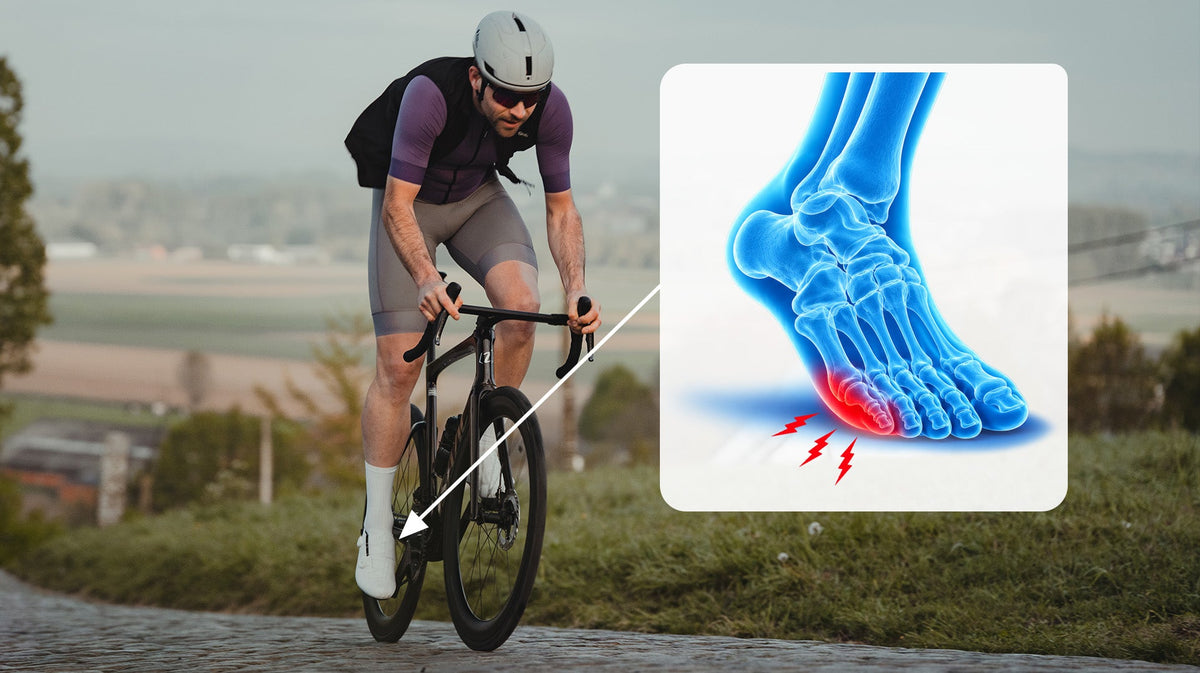
There is a quiet, meditative space that opens up a couple of hours into a long ride. The initial clutter of the week has evaporated, the rhythm of the breathing has settled, and the landscape is flowing past with a gentle, reassuring familiarity. But then, it happens. A subtle, tingling sensation at the tip of the third toe. Within ten miles, that tingle has hardened into a dull, burning numbness across the entire ball of the foot. The meditative space is gone, replaced entirely by a localized, nagging misery.
In our pursuit of the perfect ride, we often obsess over the macroscopic—the geometry of the frame, the compliance of the carbon lay-up, or the pressure in our tyres. Yet, the most critical intersection between human anatomy and engineering happens within a few square centimetres inside our cycling shoes.
Through ongoing conversations with many of the world’s leading bike fitters, and through our extensive network of retail partners, we are uniquely placed to collate the most frequently cited experiences from real cyclists. What we discover, time and again, is that foot numbness is rarely an isolated glitch; it is the predictable result of a fundamental misunderstanding of the human foot under load.

The Paradox of the Rigid Last
Cyclists often treat their feet as static blocks of bone and muscle. They buy a shoe that feels snug and supportive while standing in a showroom, or while sitting on the edge of the bed at home. But a foot at rest is an entirely different biological entity from a foot two hours into a gruelling sportive.
When we pedal, we aren't just transferring power; we are subjecting the foot to continuous, repetitive micro-trauma. As blood flow increases and fluid shifts under sustained effort, the foot naturally expands. It spreads laterally, and the metatarsal arch flattens out to absorb the force.
Herein lies the paradox: traditional cycling shoe design values rigidity above all else. A stiff carbon sole ensures that no watt is wasted. But if that rigid sole is paired with an upper that doesn't respect the natural, fluid expansion of the foot, the shoe ceases to be a tool for performance and becomes a vice.
The Anatomy of the Cycling Shoe ‘Hotspot’
The sensation of numbness—often referred to by riders as 'hot spots'—is rarely a vascular issue alone. More often than not, it is neurological.
Running between the long metatarsal bones of your feet are the digital nerves, which supply sensation to your toes. In a standard, narrow shoe, the natural expansion of the foot forces these metatarsal bones closer together. Under the high squeezing pressures of a heavy gear or a steep climb, the bones act like a nutcracker, pinching the delicate nerves between them.
The moment those nerves are compressed, a countdown begins. First comes the tingling, then the dead numbness, and eventually, a burning pain that forces you to unclip and shake your foot out on the roadside. It is a sign that the foot is crying out for structural space.

Redefining Cycling Shoe Stability: Support vs. Restriction
The immediate, instinctive reaction for many rider’s experiencing numbness is to reach down and back off the closure dials. While loosening a BOA strap mid-climb offers temporary relief by releasing the immediate pressure on the top of the foot, it is often a plaster on a deeper wound.
True stability on the bike does not come from constriction; it comes from proper support. It comes from over 40 years of cycling shoe innovation. From cycling shoes such as our legendary CX239 and the performance orientated, yet equally comfortable, recent addition to our range – the CX400.
The experts within our retail network constantly observe feet that collapse completely under the pedal stroke due to a lack of proper longitudinal and transverse arch support. This collapse causes the foot to pancake and spread even wider, forcing it violently against the unyielding walls of a narrow toe box. By introducing a structured insole with a subtle metatarsal button—a small, raised dome in the centre—we can gently lift and separate the metatarsal bones. This restores the natural arch, takes the pressure off the nerves, and stops the foot from spreading excessively.
However, even the finest insole cannot save a shoe that is fundamentally the wrong shape. This is where the philosophy of the shoe last becomes paramount.
Giving the Foot its Natural Voice
For too long, the cycling industry expected the rider's foot to conform to the shoe. The result has been generations of cyclists who accept discomfort as a tax that must be paid for enjoying the sport.
At Lake, our approach flips that paradigm entirely. By utilizing distinct, purposeful lasts—such as our Comfort Plus or Sport Lasts—we design shoes from the inside out to accommodate the real, expanding volume of the athletic foot. A wider, more naturally shaped toe box allows the forefoot to splay naturally under load. It ensures that when your foot inevitably expands on a warm afternoon or a five-hour epic, the shoe accommodates the change rather than fighting it.
Cycling should be an escape—a way to claim your daily allocation of peace and clarity. By understanding the biomechanics of your feet and respecting their need for space, you can silence the nagging distraction of numbness, allowing your mind to focus entirely on the open road ahead.

Lake - The Final Word on Comfort
Ultimately, correcting the underlying mechanics of foot numbness means acknowledging that there is no such thing as an "average" cyclist. It requires looking at the rider from the ground up, beginning at the most critical contact point we have with the machine. As world-renowned bike fitting expert Julian Wall of ‘CycleFit UK’ so clearly summarized during our previous discussions on shoe architecture and foot health:
"Cycling can be more individual than walking, and yet we usually get our feet measured when buying ordinary shoes. All we ask is that you take a moment to consider what your own actual cycling shoe needs are... because cycling should always be fun and comfortable!"
By stepping away from restrictive designs and choosing a shoe that embraces the natural, fluid expansion of your feet, you aren't just solving a physical problem. You are reclaiming the freedom of the ride itself.
Lake have been innovating and creating some of the best cycling shoes in the world for over 40 years now. And so, as we draw towards the end of another year, shouldn’t you be riding into the future wrapped in our legendary cycling shoe comfort?
Why Your Cycling Shoe Size Has an Expiry Date
Winter Cycling Shoes: Getting to the soul of cycling shoe design